
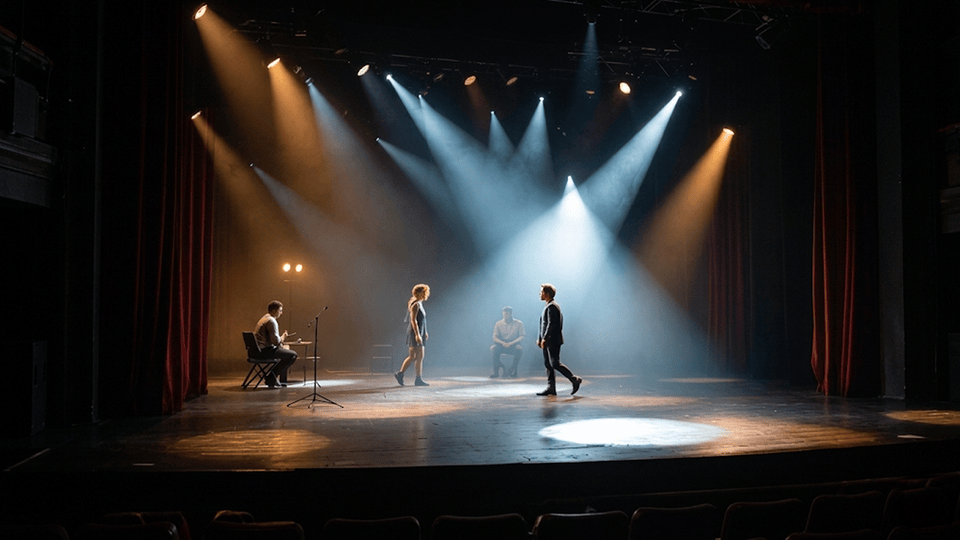
Color temperature is one of the most psychologically direct tools in a lighting designer's vocabulary. Audiences do not consciously analyze it, they feel it. A shift from warm amber to cool blue does not need a script note or an announcement; the room changes, and the audience responds.
Why color temperature affects mood
Warm light, ambers, golds, and soft oranges in the 2700-3200K range, is associated with intimacy, energy, celebration, and comfort. It is the color of firelight, sunsets, and incandescent interiors. Audiences lean into it at concerts, award shows, and emotional storytelling moments.
Cool light, blues, cyans, and desaturated whites above 5500K, reads as clinical, vast, tense, or powerful depending on context. It is the color of open sky, technology, and authority. In AV productions it often underscores corporate reveals, data-driven presentations, and high-stakes moments where the audience should feel attentive and alert rather than warm and relaxed.
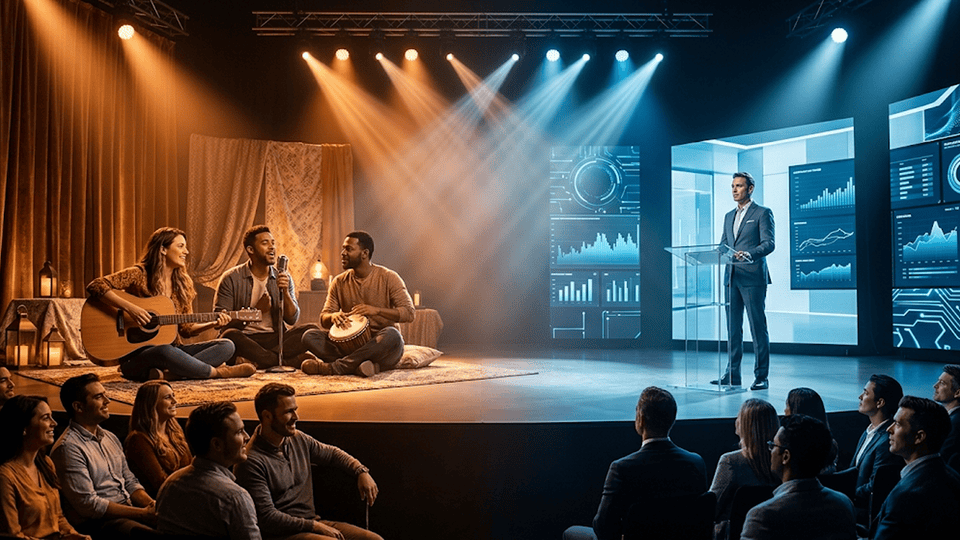
Building the transition into your cue stack
Effective color temperature transitions are rarely instant. A snap from warm to cool reads as a technical reset rather than an emotional shift. The most impactful transitions happen over 2 to 8 seconds, long enough for the audience to feel the room change without having time to consciously notice it happening.
- Use 3-6 second fade times for emotional transitions, not snaps
- Shift wash temperature first, then follow with background and back-light
- Keep key spot temperature neutral during transitions so performers stay readable
- Pair cool looks with reduced intensity, slightly dimmer reads as more dramatic
Knowing when to hold the look
The transition is only half the technique. The other half is holding the arrived look long enough for it to register. Lighting designers who transition too frequently train the audience to tune out color changes, the effect becomes visual noise rather than emotional direction. In practice, each color environment should last at least as long as the segment it is supporting: if a speaker has a five-minute segment, the lighting look should hold for that segment rather than drifting through multiple temperatures.
On the other hand, a carefully timed transition during a silence, a musical swell, or a key reveal can be one of the most powerful single cues in a show, the moment the room physically shifts and the audience feels it before they can name it. That is the target: a transition so well timed it feels inevitable.
Warm-to-cool transitions are not a stylistic choice to apply indiscriminately, they are a precision tool for directing emotional states. Used deliberately, with controlled timing and clear intent behind each shift, they transform a cue stack from a list of looks into a narrative. The audience will not explain why the show felt emotionally coherent, but they will feel it every time.