
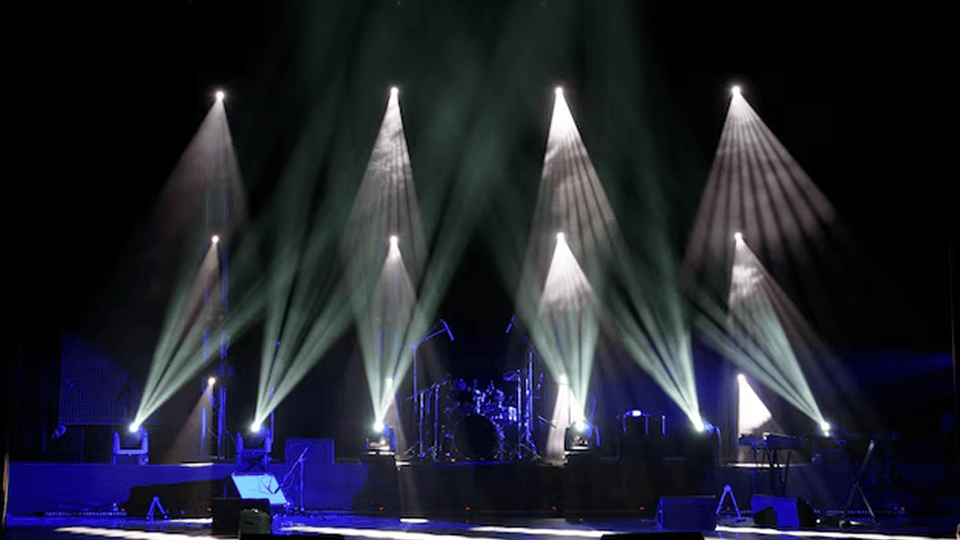
Depth in stage lighting is not about how many fixtures you have, it is about where you put them. Three simple placement strategies, applied consistently, will make almost any stage look more three-dimensional and professionally lit within minutes of focusing.
Back-light as the depth foundation
Back-lighting is the single most powerful tool for creating depth on any stage. When fixtures are positioned upstage and angled forward and down onto performers, they create a rim of light that separates subjects from the background visually. Without back-light, even a well-lit front wash will make performers look flat and painted onto the backdrop.
For most mid-size stages, a single back-truss or vertical boom position behind the performer area is enough. Even at moderate intensity, 30 to 40%, back-light immediately adds a three-dimensional quality that no amount of additional front light can replicate.

Cross-lighting for texture and dimension
Cross-lighting means placing fixtures at the sides of the stage and angling them toward center. Where front-on lighting flattens surfaces, side-angle light reveals texture, contour, and form. On performers, it shows facial structure. On set pieces and scenery, it reveals texture and creates natural-looking shadow gradients that make surfaces read as real rather than flat.
- Back-light: 15-30° down angle from directly behind
- Cross-light: 45-90° from the sides at performer head height
- Low fill: shin-busters or floor-level PAR cans aimed upward
- Layer all three at different intensities, not all at 100%
Low-angle fills that reveal form
Floor-level lighting, often called shin-busters in live production, adds a upward-facing fill that creates another plane of light entirely. Used subtly, it softens harsh shadows and adds warmth at foot level. Used dramatically, it creates a signature look that immediately reads as intentional design. The key is level: low-angle fills work best at 10-20% of your key light intensity. Too bright and they create unflattering shadows; at the right level they add dimensionality and interest without drawing attention to themselves.
Back-light, cross-light, and low-angle fill are three layers that work together as a system. Start with back-light to add separation, add cross-light for texture, then dial in low fills to shape the shadows. Apply all three at different intensities and the stage will read as deep and professional regardless of how simple the fixture list is.